What is a mortgage?
A mortgage (Verkehrshypothek) is a so‑called real property lien. This means that the mortgagor gives up certain rights to his property — he is subject to the owner’s land charge. In return, he receives an agreed consideration. As a rule, this is a cash payment in the form of a loan. The maximum payout amount of the mortgage is determined by the value of the property. Banks use mortgages as collateral for financial services.
General information about mortgages
Is there a difference between a loan and a mortgage?

A loan is the official term for a financial service that is commonly known as credit. It is an obligation-based contract in which a lender provides capital or goods (a loan in kind) to a borrower for temporary use. By agreement, the borrower is obliged to repay the capital amount or the goods on maturity. The specific terms for the loan are contractually defined and determined by the financial institution. It is not necessary to prove ownership of an asset that could cover the loan amount in case the borrower becomes insolvent. This is precisely the decisive difference between a loan and a mortgage. To take out a mortgage, ownership of real estate must be demonstrated. The value of the property is used to determine the mortgage amount. In the event of the mortgagor’s insolvency, the mortgagee can assert its real property lien.
The real property lien in mortgage law
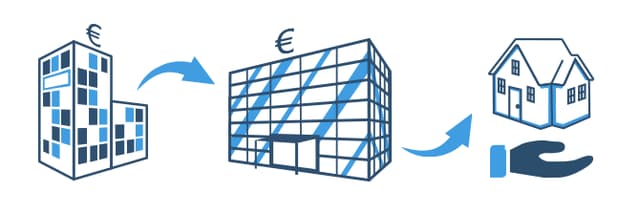
The creditor of an outstanding claim for a mortgage or a loan can fall back on the real property lien. In the context of a mortgage, this means that the creditor — in this case a financial institution — can use its lien to take possession of the property contractually bound to the mortgage. The financial institution then has the right to use the proceeds from disposal to settle the outstanding payments.
If the real property lien does not come into play, the mortgage is actively repaid with each payment. This means that after the repayment of the full loan amount, including fees and interest, the mortgage is removed and the lien automatically expires. The situation is different with the so‑called Grundschuld (land charge). The amount of a Grundschuld remains constant over the entire repayment period and does not automatically expire when the outstanding principal is repaid.
What is the difference between a mortgage and a land charge?
A land charge entitles its holder to satisfy outstanding claims for a sum of money by claiming against a plot of land or a property. This includes, among other things, land, condominium ownership, or hereditary building rights. This land charge is also used to secure a loan. At first glance, a land charge therefore resembles a mortgage.
However, the land charge has another dimension. Unlike the classic mortgage, the land charge can restrict the borrower from freely disposing of the encumbered asset. This means the debtor cannot sell the property at will to use the proceeds to repay the debt. By virtue of the land charge, the lender — the financial institution — is listed as the legal holder in the land register. Even after repayment of the loan, this entry remains. The financial institution only removes the land charge from the land register at the borrower’s request.
Cancellation of the land charge
A release declaration is required to delete the land charge. This is issued by the lender. Once the mortgage is repaid, this declaration can be requested from the bank. This process is generally quick and straightforward. However, it should be noted that deletion is associated with a comparatively high cost. Several hundred euros can quickly become due. Since deleting the land charge is not always necessary and may even secure certain advantages, homeowners may consider foregoing deletion. It is possible to sell the house along with the land charge.
Is a mortgage always entered in the land register?
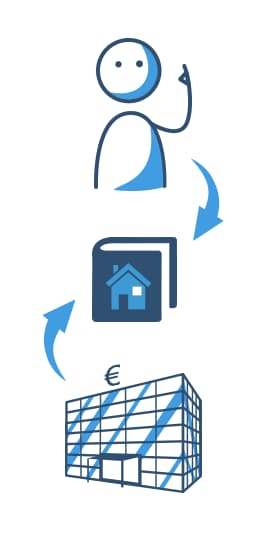
Every mortgage is entered in the land register. The entry is necessary to secure the financial institution’s rights in the property. Without an entry in the land register, the creditor cannot fall back on the property in the event of outstanding claims or enforcement. The legal standard case for registering the mortgage is the mortgage deed (Hypothekenbrief). After the entry, the mortgage deed is handed over to the mortgage creditor. This is where the term “brief mortgage” (Briefhypothek) comes from.
Why do property owners use the option of a land charge?
The land charge is a valuable security not only for the financial institution. Many property and landowners use the registration of a land charge as a protection of the asset. It is not possible to dispose of the charged asset without the consent of the holder of the land charge. This fact can be very valuable, for example, in the context of inheritance disputes.
What types of mortgages are there?
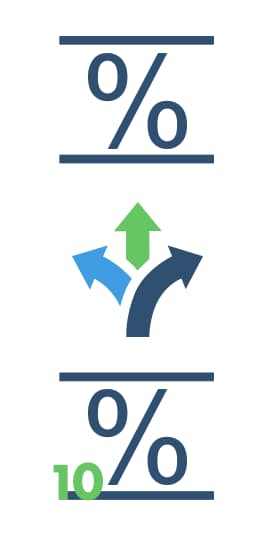
Mortgages are offered in various basic models or mixed variants. Generally, the following models are distinguished:
- Fixed mortgage / fixed‑rate mortgage
- Variable mortgage
- LIBOR mortgage
The fixed mortgage, also called a fixed‑rate mortgage, works with a set interest rate and a fixed term. This means the borrower will not feel possible market fluctuations and associated interest rate decreases or increases. The fixed mortgage therefore provides a predictable cost structure over the entire term of the mortgage. This type of mortgage is concluded especially in financial periods when rising interest rates are expected in the future. In addition, it is a good choice for borrowers who cannot exceed a certain financial burden.
A variable mortgage foregoes a fixed interest rate and does not operate with a fixed term. However, it is common to agree a minimum term contractually. The actual interest rate is adjusted to the interest level of the capital markets. It is therefore not possible to plan the capital burden.
An alternative to the variable mortgage is the LIBOR mortgage. Both variants describe a so‑called “roll‑over loan”. The LIBOR mortgage is based on the London Interbank Offered Rate (LIBOR). This reference rate is used to calculate the loan interest. The interest adjustment takes place at an agreed rhythm and with an agreed margin for the financial institution. The adjustment, for example every six months, then reflects the current market rate. This can be a cost‑optimizing option, particularly for a large loan amount.
Another type of mortgage is the reverse mortgage. This is a very special form of mortgage that is better described by the term home pension.
What exactly is a reverse mortgage?
The reverse mortgage concept originates from the USA. It is now offered in a number of European countries as an attractive financial product, including the Netherlands and Germany.
Reverse mortgages provide a lump sum or a monthly pension payment with the mortgage loan. In return, the financial institution is registered in the land register with a land charge. Interest and repayment costs are then accrued — hence the term reverse mortgage. The repayment of the loan is only due after the borrower’s death or upon sale of the property. This financial product is increasingly used to cover shortfalls in private and statutory pension provision. More and more retirees find that pension payments are not sufficient to maintain their accustomed standard of living.

Mortgage deed and register mortgage
In addition to the models already mentioned, mortgages can also be divided into mortgage deed (Briefhypothek) or register mortgage (Buchhypothek). The legal basis for mortgage deeds and register mortgages is $ 1116 of the German Civil Code (BGB). When one generally speaks of a mortgage, a mortgage deed is meant, as this corresponds to the standard. If the issuance of a mortgage deed is excluded, one speaks of a register mortgage. In a register mortgage, an entry in the land register serves as security.
The issuance of a mortgage deed increases negotiability in the case of a brief mortgage. Due to reduced negotiability, the register mortgage is less attractive for the lender and is therefore used only rarely.
The form of a register mortgage is often used when a forced mortgage (Zwangshypothek) is required. According to the law, this form of security mortgage is always a register mortgage, as no mortgage deed is issued (§ 1185 BGB).

Legal special forms of the mortgage
A mortgage is also referred to as a real property lien. It concerns an immovable asset. The entry in the burden sheet of the land register creates the mortgage. There are a number of legal special forms of the mortgage:
- Maximum amount mortgage (Höchstbetragshypothek)
- Simultaneous mortgage (Simultanhypothek)
- Claim‑stripped owner’s mortgage (Forderungsentkleidete Eigentümerhypothek)
A maximum amount mortgage becomes relevant when a financial institution grants a loan and requires pledge security in return. The lien is taken for a specific amount — the maximum amount — by the bank. Regardless of the actual claim, the bank can claim the specified maximum amount in the event of enforcement.
The simultaneous mortgage combines several properties, which are together liable for a single claim. In the event of enforcement, the debtor can decide which property should be liquidated by the bank.
A claim‑stripped owner’s mortgage allows the borrower to secure a specific rank in the land register with a settled mortgage. This type of mortgage can place a particular creditor in a priority position in the land register. This can be decisive for handling liquidation in the event of a forced sale.
Mortgage terms
How is a mortgage taken out?
A mortgage loan is granted by financial institutions such as a bank. To be granted a mortgage, the mortgagor must meet certain conditions. These can vary slightly between banks. In general, the following conditions must be met:
- Regular income
- Positive Schufa report
- Equity (when applying for a mortgage for house construction)

There is no fixed amount required for the level of equity. As a rule, equity of at least 20% of the loan amount should be available. Depending on personal finances, full financing is also possible. Mortgages are granted both for house construction and for free use of the capital. For example, major renovation work on the house can be financed with a mortgage.
Once the mortgage loan contract is agreed and signed, the bank is entered in the land register. The financial institution is recorded as an official co‑owner in the land register. Once the entire amount has been repaid, the bank is removed as co‑owner from the land register. The mortgage amount actively decreases during the repayment period. In the event of a forced seizure, the bank is only entitled to the outstanding mortgage amount. Surplus proceeds from the sale of the property are passed on to the other land register holders.
A mortgage loan can only be taken out by the owner of the property. If several persons are named as owners in the land register, the mortgage must be approved by all parties.
How much money do I need monthly to be able to pay the mortgage?

The actual monthly costs for mortgage payments consist of a number of factors:
- Amount of the mortgage loan
- Interest
- Repayment
- Term
A smaller loan amount does not automatically mean a lower monthly payment. If the repayment period is very short and the active repayment correspondingly high, even a small mortgage can cause high monthly costs. The actual costs for a mortgage and the income required are determined individually.
What happens if insolvency occurs?

If a debtor becomes insolvent, a forced sale (foreclosure) of the property may occur. The bank uses the sale and the proceeds from the property to cover the outstanding amount. If it is foreseeable that a financial bottleneck will occur, it is advisable for the consumer to contact the financial institution. Banks are often very helpful and support customers in overcoming the financial crisis — on‑contract repayment of the mortgage is more profitable for the bank than disposing of the property in a forced sale. Customers can, for example, agree a repayment suspension with the bank. This significantly reduces the monthly burden. For a longer‑term solution, a restructuring of the loan terms is also possible.
Act early to avoid foreclosures.
Even if it is not always possible, there are ways to prevent a forced sale. Even after the official initiation of foreclosure proceedings, the final auction of the property can still be averted:
- Apply for a temporary suspension of the proceedings.
- File an objection against the enforcement order.
- Submit an application to extend the enforcement period.
If it can be demonstrated before the enforcement court that the outstanding claims can be settled within a realistic timeframe, the chances of stopping the forced sale are good. Once an objection or application has been filed, debtors also gain additional time. During ongoing proceedings, enforcement may not be carried out.
If a forced sale is carried out, creditors are paid in the order of entries in the land register. If more than one mortgage must be settled, the older loan is paid first.
What happens to the mortgage when the property is sold?
It is possible to sell a house that is encumbered by a mortgage. There are two options: the mortgage loan can be repaid early, or it can be taken over by the buyer. The takeover of the loan by the buyer is often the cheaper option. Early termination of an existing mortgage is associated with significant costs.
Is it possible to sell a house despite a mortgage?
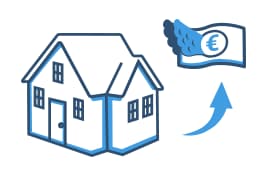
There are many reasons why a property may need to be sold unexpectedly: family changes, new financial circumstances, or a job move to a different location are just a few examples. Selling the property is possible despite an ongoing mortgage loan. If the loan contract is still within the agreed fixed interest rate period, the bank and the debtor are bound by the contract terms. For termination of the mortgage, it is therefore necessary to prove special circumstances. The sale of the property is legally recognized as a circumstance that allows cancellation and restructuring of the contract. The bank must accept early repayment by the creditor. However, the bank’s consent is required for a change of debtor.
Mortgage takeover by the buyer
If the property is sold with an existing mortgage and the mortgage is repaid, the bank’s lien is deleted from the land register. The costs for this deletion are borne by the seller. Afterwards, the mortgage is re‑registered by the financial institution as a land charge — this time as security for the new buyer and the loan.
Repayment and termination of the mortgage
Terminating the loan early

The loan can be repaid early under special conditions. Consumers have two options. The outstanding amount can be covered in a one‑off payment using liquid funds — for example, the proceeds from the sale of the property could be used. Or the outstanding amount can be covered by a new loan from another financial institution. This process is known as refinancing.
A distinction must be made between repayments within and outside the fixed interest rate period. Repayment within this period is classified as early. This results in special costs in the form of prepayment penalties (Vorfälligkeitsentschädigung). These costs are usually quite high.
When does early repayment of the mortgage make sense?
Whether repayment or termination of the mortgage makes sense must be determined on a case‑by‑case basis. The purchase of a property is usually financed through the buyer’s house bank. Customers enjoy the advantage of obtaining a loan more easily than from an external bank. If the buyer’s house bank does not coincide with the seller’s house bank, this can cause a problem. A new financing arrangement will only be approved if the financial institution is listed first with its land charge in the land register — in the event of a forced sale, the bank listed first will be considered first for debt settlement. If the mortgage loan is merely transferred, the remaining financing with the associated land charge is not listed first in the land register. Financing by the buyer is therefore not always possible together with a takeover.
Depending on the individual situation, incurred costs can be added to the purchase price of the house. This allows the seller to avoid a financial disadvantage from early termination of the mortgage.
What fees are charged for terminating a mortgage?
The costs for early repayment of the mortgage and deletion of the entry in the land register are determined according to specific rules:
- The type and value of the transaction are important for the level of fees — §3 of the Court and Notary Costs Act (GnotKG)
- §34 paragraph 2 GnotKG determines the fee amount. Notary and land registry costs are calculated separately.
- If the land charge is below €200,000, the notary and land registry receive a so‑called “half fee”. For land charges over €200,000, a “full fee” applies. The costs are detailed in the GnotKG.
- The fee is paid with value added tax.
Can the bank terminate the mortgage?

In individual cases, a mortgage may be burdened with substantial partial payments by the bank. The financial institution demands these payments from debtors to reduce the total burden of the mortgage. This primarily has regulatory reasons. Financial institutions are legally obliged to adjust the mortgage repayment burden to the income and equity of the borrowers. If there is a noticeable change in the financial conditions, the demand for a partial payment is possible. In the worst case, this can result in termination of the contract.
The bank is obliged to demonstrate that the repayment burden is too high and that a partial payment is therefore necessary. In addition, termination without cause is not possible — the bank is bound by the contractual terms.
Our summary on the topic of mortgages
Advantages of a mortgage loan
- Flexible repayment options allow instalments to be adjusted to personal financial circumstances.
- Long terms are possible.
- High loan amounts can be covered.
Disadvantages of a mortgage
- High costs when terminating.
- Variable mortgages can carry high interest burdens.
- Equity is necessary for financing construction with a mortgage.
Numbers and facts about mortgages
- A mortgage loan is usually granted for up to 80% of the property value.
- Full financing is possible in individual cases.
- Total costs consist of interest, fees, and repayment costs.
- A longer term increases total costs.